Taximeter
- 4.4
- Rating
- 10.00K
- Installs
- $17.99
- Price

 Analysis by App-foxy
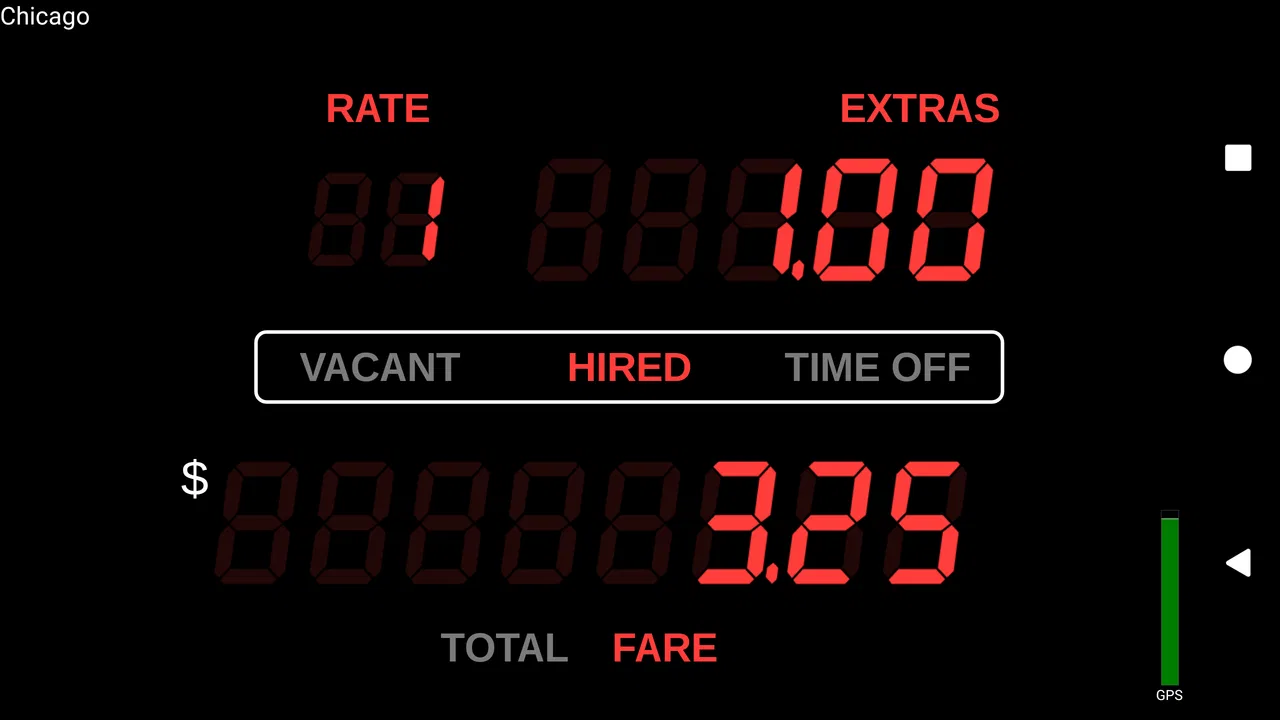
I approached Taximeter as a working tool rather than a casual utility, and that distinction matters. This is an Android app in the Auto & Vehicles category from Planet Coops, built around one focused job: helping a driver calculate a taxi fare while a trip is in progress. My overall view is that its narrow purpose is also its main strength. It does not try to become a navigation app, a dispatch platform, a payment terminal, or a passenger-management system. If you need a dedicated taximeter and are prepared to configure and operate it carefully, it can be a practical choice. If you want an all-in-one ride service toolkit, it will feel limited.
The app has been available since October 23, 2010, and its current version is 1.1.147. That long presence gives it a more established feel than a newly released utility, although age alone should not be mistaken for modern design. I found the most useful way to judge it is to ask a simple question: does a focused fare meter make my work easier than estimating a price manually or relying on a general-purpose calculator? For drivers who regularly need a visible, dedicated meter, the answer can be yes.
How Taximeter works in everyday driving
I look at Taximeter as a work tool whose value depends on the routine around it, not just the fare shown on screen. In this section, I’ll focus on the practical choices that make a dedicated meter useful during a shift, including how I’d prepare before accepting a passenger. That leads naturally to the next question: where this focused approach has an edge over other ways of tracking a fare.
You May Also Like

 Blood Strike: 2.5 Anniversary
Blood Strike’s Loadouts Turn Every Drop Into a Tactical Gamble
A close look at Blood Strike’s custom loadouts: how fast access to signature weapons reshapes its battle royale rhythm, rewards preparation, and narrows the gap between fights.

 Pandora - Music & Podcasts
Pandora’s Music Is Easy to Start, but Harder to Recover
Pandora’s strength is its low-effort path from a seed to a station. Its weak spot is how much confidence it asks you to place in connection, setup, and quiet recovery.

 8 Ball Pool
 Is Built on Rivalries, Rematches, and Routine
A close look at the rivalries, rematches, shared routines, and unanswered safety questions that turn a quick pool match into a persistent mobile community.

 Samsung Music
’s Quiet Strength Is Playing What You Already Own
Its reach comes less from spectacle than from dependable access to a personal library. That simplicity is both the app’s strongest retention engine and its ceiling.

 AccuWeather: Weather Radar
AccuWeather Review: A Quick, Clear Forecast for Everyday Decisions
For everyday plans, the best forecast is the one you can understand quickly. AccuWeather makes rain timing, radar, and local conditions easy to act on, with a few trade-offs.

 Hill Climb Racing
Why Hill Climb Racing Still Turns Crashes Into One More Run
A tiny car, a bumpy hill and one more upgrade: Hill Climb Racing keeps resurfacing because its simple chaos makes every near-miss feel personal.
More From Our News Desk



A focused tool for fare calculation
The central appeal is obvious once you imagine the app in use. A driver starts a trip, keeps the phone visible, and uses the meter as the reference for the fare instead of trying to remember a tariff calculation or switching between unrelated tools. That focus is valuable because a working driver needs quick access to the active fare, not a cluttered dashboard filled with features that are irrelevant to the current passenger.
In my view, this kind of app is most useful when it replaces a small but recurring source of mental friction. A passenger asks for a ride, the driver accepts, and the fare needs to be tracked consistently from the beginning of the journey. A dedicated taximeter gives that process a defined place on the phone. It also makes the interaction easier to explain: the amount is being calculated by the meter rather than appearing as an improvised estimate at the end.
That does not mean the app removes responsibility from the driver. A digital meter is only as reliable as the tariff setup and the operating habits behind it. Before using it with passengers, I would spend time checking how the fare behaves in the situations that matter locally, including a stopped vehicle, slow traffic, and a trip that ends in an unfamiliar area. The important practical insight is that testing the meter before the first paid journey is more important than installing it quickly.
Why the single-purpose design helps
Many drivers already use a navigation app, a phone for calls, and perhaps a separate payment method. Adding another general-purpose transport application can create more distractions rather than fewer. Taximeter’s narrow identity is useful because it gives one screen one responsibility. I would rather have a straightforward meter beside my navigation than force a navigation tool to imitate a fare meter.
This separation also suits drivers who work independently. Someone who does not need dispatch, booking management, customer accounts, or a large fleet dashboard may find a dedicated meter easier to understand. The app is not asking to reorganize the whole business. It is aimed at the moment when the vehicle is carrying a passenger and the fare needs to be tracked.
There is a trade-off, though. A focused meter will not automatically solve the surrounding workflow. You still need your own method for navigation, accepting rides, recording income, handling receipts, and confirming the applicable local tariff. That can be a benefit for an experienced driver who already has a routine, but a disadvantage for a newcomer hoping for a complete taxi-business package.
A realistic trip scenario
Imagine a driver beginning an evening shift with a fully charged phone and the meter ready to use. A passenger asks for a ride across town. The driver starts the fare at pickup, keeps navigation available for the route, and checks the meter when traffic slows or the vehicle stops. At the destination, the displayed amount becomes the basis for the payment conversation. That workflow is simple, but it reveals where preparation matters: the driver should know exactly when to start, how to pause or end the trip, and how to deal with a passenger who asks for an intermediate stop.
I would also keep the phone positioned so that the driver does not need to handle it while moving. The app’s usefulness depends on safe operation, not just calculation. If a driver is constantly tapping through menus during a trip, the tool has become a distraction. My practical approach would be to set up the meter before departure, use it with minimal interaction while driving, and complete any final adjustments only after stopping safely.
Another non-obvious consideration is passenger confidence. A visible meter can make the fare process feel more transparent, but only if the driver explains unusual charges clearly. If the amount changes during waiting time or a stop, the passenger may need a brief explanation. The app can display a result, but it cannot replace clear communication about the pricing rules being applied.
Where it compares well with ordinary alternatives
The usual alternative is mental arithmetic, a paper tariff card, or a basic calculator. Those options can work for a very occasional ride, but they place more of the calculation on the driver and make it harder to track a changing fare during a long journey. A dedicated taximeter is better suited to repeated trips because it creates a consistent process rather than requiring a fresh calculation every time.
A navigation app is another common substitute, but navigation and fare measurement are different jobs. Navigation answers where to go; a meter answers how the trip is being charged. I would not expect a navigation application to be a satisfactory replacement for a dedicated fare tool unless the driver only needs rough estimates.
At the other end of the spectrum are modern taxi platforms that combine booking, route management, payments, driver identity, and customer communication. Those services may be better for drivers who depend on an integrated network. Taximeter makes more sense for someone who wants control over the fare tool without committing to a particular booking ecosystem. The choice is less about which category is universally superior and more about whether the driver values independence over integration.
What the public response suggests
The app holds a 4.4 average from around 704 ratings, with roughly 133 written reviews. Those figures suggest that many users find the focused concept worthwhile, while the written feedback is still substantial enough to show that experiences are not identical. I would read that as encouragement rather than a guarantee. A positive average can tell me that the core idea works for a meaningful group of users, but it cannot confirm that every tariff, device, or working style will suit the app equally well.
Its install base is over 10 thousand, which is modest compared with mass-market travel applications but reasonable for a specialized professional tool. That scale reinforces my impression that this is aimed at a specific audience rather than at every smartphone owner. The content rating is Everyone, so the app is not presented as restricted to an adult audience, but its practical value is clearly tied to professional or semi-professional driving.
The main weakness: setup and responsibility remain with the user
The biggest limitation is not that the app has a narrow purpose; it is that a narrow purpose demands accuracy. A driver cannot simply assume that installing a taximeter makes the fare correct for every city or operating model. Local rules, tariff structures, waiting charges, minimum fares, supplements, and rounding practices can vary. The driver needs to configure the tool in a way that matches the service being offered and then verify the result under realistic conditions.
That creates an uncomfortable gap between convenience and accountability. A general calculator is visibly manual, so the driver knows a calculation is being made. A dedicated meter can look authoritative even when the underlying setup is wrong. My advice is to compare several test journeys against a trusted local reference before relying on it with passengers. Test not only a moving trip but also a stop in traffic, because a meter that handles distance well may still produce an unexpected result when time becomes part of the fare.
There is also a human-factor weakness. A phone screen is not the same as a traditional vehicle-mounted meter. Screen size, glare, battery condition, notifications, and the phone’s placement can all affect how comfortably the driver uses it. I would treat the phone as a work instrument during a shift: keep it charged, silence unnecessary interruptions, and mount it where the driver can glance at it without taking attention away from the road.
The price is another point to weigh carefully. Taximeter costs $17.99, which is a meaningful purchase for an app with one central function. I can justify that expense for a driver who uses a meter regularly and wants a dedicated tool. I would hesitate to recommend it to someone who needs a fare calculation only a few times a year. Occasional users may be better served by a locally appropriate manual method, provided they can calculate fares accurately and legally.
Who should use it, and who should choose something else?
I see the strongest fit among independent taxi drivers, owner-operators, and drivers who already have separate tools for navigation and communication. It is particularly suitable for someone who wants a straightforward digital meter without adopting a full ride-hailing platform. A small operator who values a repeatable fare workflow may appreciate the app’s focus more than a feature-heavy business suite.
It could also help a driver who is replacing a paper-based process but does not want to change everything at once. The sensible transition is gradual: configure the meter, run it alongside the existing method on test trips, compare the totals, and only then make it the primary reference. This side-by-side period is one of the most useful ways to discover an incorrect tariff setting before it affects a customer.
I would not choose it as the first option for someone seeking dispatch, online bookings, integrated card payments, passenger tracking, or detailed business reporting. Those needs belong to a broader class of transport-management applications. I would also be cautious about recommending it to a driver who dislikes configuring technical tools. The app’s value depends on the user taking ownership of the setup, and that may feel like work rather than convenience.
For a passenger, the app is not really a service to install for occasional travel. Its role is on the driver’s side. A rider who wants to estimate the cost of a journey would probably be better served by a local fare guide or a booking service that provides an upfront quote. Taximeter is designed around measuring an active ride, not planning every possible ride in advance.
Practical habits that make the app more dependable
My first recommendation is to create a written checklist for the start of every shift. Confirm that the correct tariff is selected, the phone has enough battery, the screen is readable, and the meter is in the proper state before accepting a passenger. This sounds basic, but it prevents the most damaging mistake: beginning a trip with the meter already carrying an old state or the wrong configuration.
Second, keep a record of unusual journeys during the first several days of use. Note what happened when a passenger waited, changed the destination, requested a stop, or crossed into an area with different pricing rules. These examples reveal more than a single clean test route. They also help the driver decide when the app is appropriate and when a manual explanation or separate procedure is needed.
Third, explain the process before a confusing situation arises. If waiting time can affect the fare, tell the passenger in plain language before a long stop. If the journey includes a special charge, make sure it is understood rather than allowing the final total to come as a surprise. The app can support transparency, but transparency comes from the driver’s communication as much as from the display.
Finally, avoid treating the app as a substitute for local knowledge. A meter can calculate according to its settings, but it cannot tell the driver whether those settings reflect current legal requirements or an agreement with a customer. That is why I consider the tool best for experienced drivers who understand their own pricing obligations and want a digital instrument to support that knowledge.
Device and platform considerations
The current release requires Android 5.0 or later. That makes it accessible on a broad range of Android devices, including older phones that may still be used as dedicated work devices. In practical terms, an older compatible phone can be attractive because it can remain mounted in the vehicle while a newer phone handles personal calls or navigation. The drawback is that older hardware may have a dimmer display, weaker battery life, or slower response, so compatibility does not automatically mean comfort.
I would avoid judging the app only by how it looks on a modern personal phone. A work setup has different priorities: visibility in daylight, stable placement, easy access to the active fare, and minimal interruption. If the driver intends to use one phone for everything, the meter must coexist with navigation and calls without creating unsafe handling. If a second phone is available, separating work functions can make the routine cleaner, though it also adds another device to charge and maintain.
My final assessment
Taximeter succeeds because it understands a real need and stays close to it. I like the idea of a dedicated fare tool that can sit beside navigation rather than pretending to replace every part of a driver’s workflow. Its strongest qualities are focus, independence, and the ability to make repeated fare tracking more orderly than mental arithmetic or a paper reference.
At the same time, I would not call it effortless. The $17.99 cost is easier to accept for frequent professional use than for occasional driving, and the user must take tariff configuration, testing, safe placement, and passenger explanations seriously. The app will not compensate for an incorrect setup, and it will not provide the broader booking and payment ecosystem offered by integrated transport platforms.
My recommendation is therefore specific: choose it if you are an independent driver who wants a dedicated Android taximeter and is willing to verify the setup before relying on it. Skip it if you need a complete taxi-management service, automatic booking flow, or a tool that requires almost no configuration. For the right driver, the focused design is a practical advantage rather than a missing feature. For everyone else, a broader transport app or a simpler occasional-use method may be the better fit.
In the end, I see Taximeter as a specialized instrument, not a complete business solution. Planet Coops has kept the purpose clear, and the app’s solid user response supports the idea that this focused approach works for many people. I would install it for regular taxi work, test it carefully against local expectations, and use it as one dependable part of a larger driving routine—not as the entire routine itself.
FAQs for Taximeter
01What is Taximeter and who is it designed for?
Taximeter is a mobile application designed to help taxi drivers, private-hire drivers, and passengers estimate or calculate fares during a journey. Depending on the version and region, it may use distance, travel time, waiting time, configurable tariffs, and additional fees. Before relying on its result, users should confirm that the app supports their local currency, measurement units, taxi regulations, and fare structure.
02How accurate are the fares calculated by Taximeter?
Taximeter can provide a useful fare estimate, but its result should not automatically be treated as an official price. Accuracy depends on GPS performance, mobile device sensors, traffic conditions, the selected tariff, and how correctly the rates have been entered. Tunnels, tall buildings, weak signals, route changes, waiting charges, tolls, and local surcharges may cause the displayed amount to differ from the final fare.
03Can I customize Taximeter for my city or taxi company?
In most cases, Taximeter is useful because it allows drivers to configure important pricing elements, such as a starting fee, cost per kilometer or mile, time-based charges, minimum fares, waiting rates, and extra supplements. However, customization options can vary between versions. Drivers should carefully compare every setting with their company’s official tariff and test several sample journeys before using the app professionally.
04Does Taximeter require an internet connection or GPS access?
Taximeter generally needs location permission to measure the route, distance, and movement of the vehicle. GPS may work without a constant internet connection, although maps, address searches, updates, or certain online features could require mobile data or Wi-Fi. For reliable operation, enable location services, grant only the permissions you are comfortable with, and remember that poor signal or indoor use can reduce tracking accuracy.
05Is Taximeter suitable for official billing and payment collection?
Taximeter should normally be considered a fare-calculation and estimation tool rather than a complete certified taxi meter or payment terminal. It may not meet the legal, calibration, receipt, tax, or certification requirements imposed by local transport authorities. Drivers should check applicable regulations before using it with passengers, and passengers should request an official receipt or licensed meter reading whenever local law requires one.
Pros
- Calculates fares quickly using distance and elapsed travel time.
- Useful for checking whether a taxi fare seems reasonable.
- Simple interface that is easy to understand during a ride.
- Can help estimate trip costs before getting into a taxi.
- Handy for travelers unfamiliar with local taxi pricing.
Cons
- Accuracy depends on correct local rates and regional taxi regulations.
- GPS readings may become unreliable indoors or in dense urban areas.
- Rates may not include tolls
- surcharges
- or airport fees.
- Requires location access and may use extra battery during a trip.
- Some features or rate settings may vary by country and city.

Taximeter
Gallery